
The complete guide to used car inspection checklists
A 150-point inspection checklist for used car evaluation — what to check, how to grade, and how to present it to buyers.
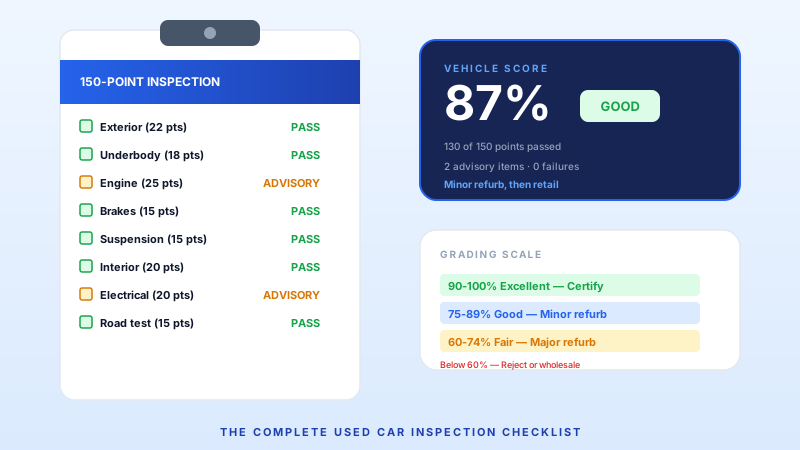
If you buy, sell or certify used cars, the inspection checklist is the most important document in your business. A thorough, standardised checklist does three things: it protects you from liability, it builds buyer confidence, and it catches expensive problems before they become your problem.
Here is the definitive checklist framework used by professional used-car operations in India and the Middle East.
Why a checklist (not just "the mechanic checked it")
- Consistency. Ten different technicians should produce the same assessment for the same vehicle.
- Legal protection. If a buyer complains post-sale, a signed, timestamped, photo-documented checklist is your defence.
- Pricing accuracy. Each failed item has a refurbishment cost. Sum them up and you have a fact-based negotiation with the seller.
- Buyer confidence. A 150-point inspection report handed to a buyer at delivery converts sceptics into promoters.
The 150-point framework (8 categories)
Category 1: Exterior (22 points)
- Body panels (all 12): dents, scratches, rust, repaint evidence
- Bumpers (front/rear): cracks, alignment, parking sensor condition
- Glass (windshield, all windows, mirrors): chips, cracks, tint condition
- Headlights, taillights, fog lights: clarity, alignment, moisture
- Door handles and locks: operation, play
- Roof and pillars: rust, repaint, sunroof operation (if equipped)
- Paint meter readings at 12 points (record micron values)
Category 2: Underbody and structure (18 points)
- Chassis rails: rust, damage, repair evidence
- Floor pan: corrosion, welding marks
- Subframe mounts: condition, bushings
- Exhaust system: hangers, catalytic converter, leaks
- Fuel lines and brake lines: corrosion, routing
- Structural bolt check: original markings intact
Category 3: Engine and drivetrain (25 points)
- Engine oil: level, colour, contamination
- Coolant: level, colour, overflow check
- Belts and hoses: cracks, tension
- Battery: voltage, terminals, age
- Air filter: condition
- Transmission fluid: level, colour, smell
- Drive shaft and CV joints: boots, play
- Engine mounts: wear
- OBD-II scan: stored codes, pending codes, freeze frame data
- Cold start behaviour: noise, smoke, idle stability
- Hot engine behaviour: temperature, oil pressure
Category 4: Brakes (15 points)
- Brake pad thickness (all 4 wheels): measure in mm
- Disc condition: scoring, warping, minimum thickness
- Brake fluid: level, colour, boiling point test
- Handbrake: travel, holding on incline
- ABS function: warning light, test activation
- Brake lines: corrosion, leaks
- Pedal feel: firmness, travel, pulsation
Category 5: Suspension and steering (15 points)
- Shock absorbers: bounce test, leaks
- Springs: sag, cracks
- Bushings: condition (control arm, stabiliser)
- Wheel bearings: play, noise
- Steering rack: play, leaks
- Power steering fluid: level, condition
- Alignment check: toe, camber (measure or visual)
- Tyre condition: tread depth (all 4 + spare), age, uneven wear
Category 6: Interior (20 points)
- Seats: wear, stains, adjustment mechanisms, heating (if equipped)
- Dashboard: cracks, warning lights, odometer verification
- Air conditioning: cooling performance (measure vent temperature), heater, blower speeds
- Infotainment: screen condition, audio, Bluetooth, navigation
- Power windows: all 4, speed, auto-up/down
- Central locking: all doors, boot, fuel flap
- Airbag system: warning light, visual check of covers
- Seatbelts: retraction, latches, pre-tensioner check
- Boot: carpet, spare wheel, tool kit, boot light, hinges
Category 7: Electrical (20 points)
- All exterior lights: headlights (low/high), indicators, hazards, reverse, number plate
- Wiper system: speeds, washer, rear wiper
- Horn: operation
- 12V outlets and USB ports
- ADAS systems (if equipped): camera, sensors, calibration check
- Keyless entry and push-start: both keys functional
- Instrument cluster: all gauges, all warning lights self-test
Category 8: Road test (15 points)
- Engine performance: acceleration, responsiveness
- Transmission: shift quality, gear engagement
- Braking: straight-line stopping, no pull
- Steering: straight-line tracking, turning circle
- Suspension: bump absorption, noise
- NVH (noise, vibration, harshness): abnormal sounds at speed
- Clutch (if manual): engagement point, slippage
- Cruise control and ADAS: functional test
Grading system
For each checkpoint, use a 3-grade scale:
- Pass (green): meets acceptable standard
- Advisory (amber): functional but will need attention within 6 months
- Fail (red): needs immediate repair/replacement
Calculate a summary score: ``` Vehicle score = (Pass items / Total items) x 100 ```
| Score | Grade | Recommendation |
|---|---|---|
| 90-100% | Excellent | Certify and retail |
| 75-89% | Good | Minor refurbishment, then retail |
| 60-74% | Fair | Significant refurbishment needed — price accordingly |
| Below 60% | Poor | Wholesale only or reject |
Documentation requirements
Every inspection should produce:
- 150-point checklist with pass/advisory/fail for each item
- Paint meter readings at 12 body points
- OBD-II scan report with stored and pending codes
- Minimum 20 photos: 4 exterior corners, 4 interior angles, engine bay, underbody, tyres, dashboard/odometer, any damage points
- Technician signature and timestamp
- Estimated refurbishment cost for all fail and advisory items
How to present it to buyers
Don't hand buyers a 10-page technical document. Give them:
- A single-page summary with the overall score, category scores, and top 3 advisory items
- A QR code linking to the full digital report with photos
- The refurbishment done list (what you fixed before putting it on sale)
This is what separates a "checked by mechanic" car from a "certified pre-owned" car. The difference in buyer willingness to pay is 5-12%.
GetAFix Used Vehicle Management includes a customisable digital inspection checklist with photo capture, OBD integration, scoring, and buyer-facing report generation. See it work.
Related reading
How to choose the best garage management software in India (2026 guide)
A practical buyers' guide for Indian auto workshops and garage chains — from single-bay independents to multi-city franchises.
AI in automotive workshops: hype vs. reality in 2026
Everyone claims AI. This post cuts through the noise — what AI actually does inside a working garage today, and what is still marketing.