
U Drive Fleet keeps 600 yellow-board taxis on the road with asset genealogy
How U Drive Fleet — a 600-vehicle commercial taxi leasing operator with a captive garage — uses GetAFix asset genealogy, 40-day service reminders and used-part intelligence to cut spares spend by 18% and decide repair-vs-replace in minutes, not days.
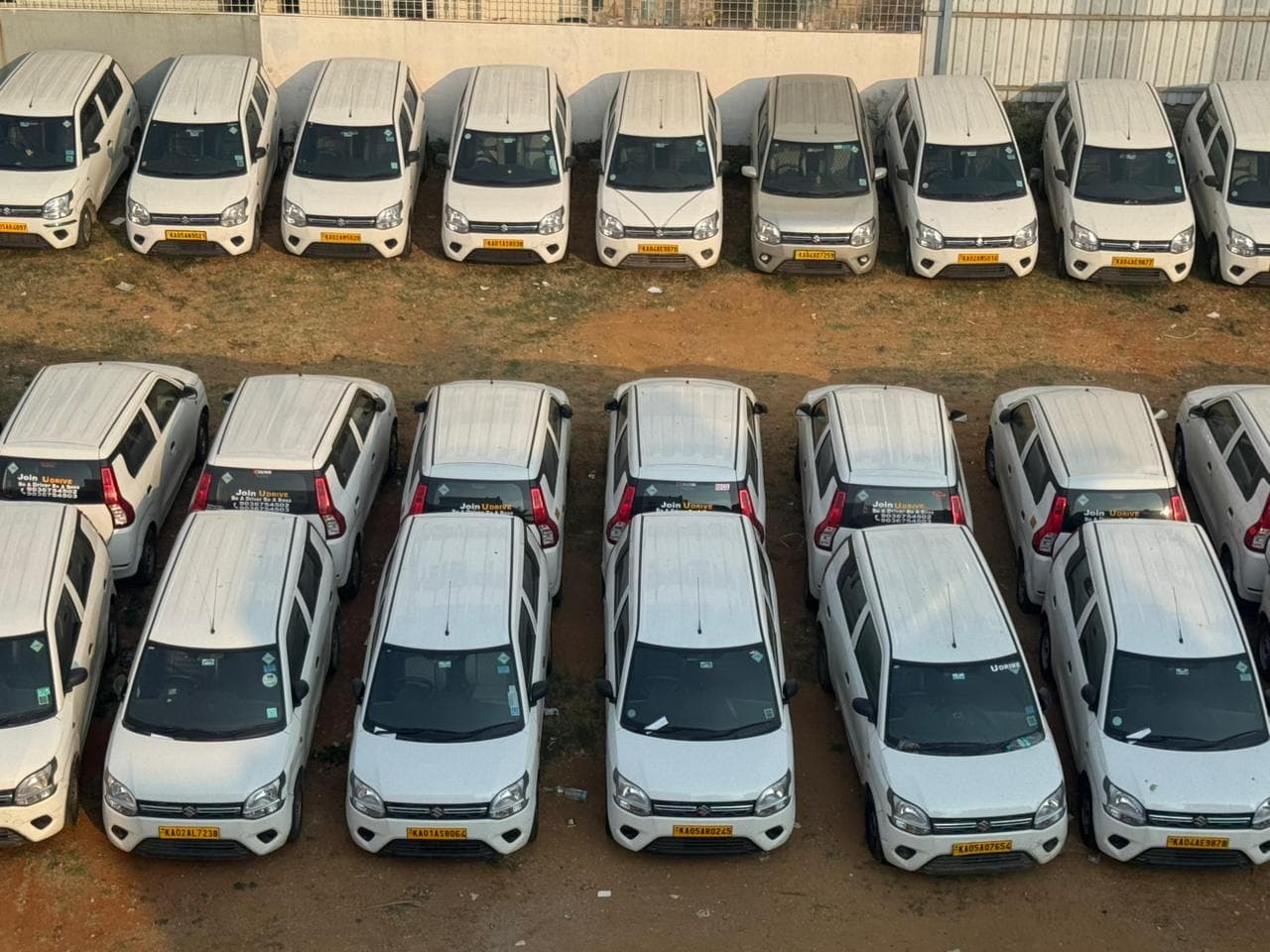
- 600
- Taxis in the fleet
- –18%
- Spares spend, via reuse intelligence
- 40 days
- Service reminder window enforced
- Minutes
- Repair-vs-replace decisions
The challenge
U Drive Fleet (udrivefleet.com) leases out 600 yellow-board commercial taxis and services the entire pool through its own captive garage. With vehicles rolling off shift at all hours and the same parts moving between taxis over a long service life, two issues bit daily: the team had no single place to see what had already been spent on a given vehicle — so repair-vs-replace on an ageing taxi was a gut call — and no reliable way to tell whether a spare in the garage had already been fitted (and later removed) on an earlier job, so good stock got written off while worn parts silently cycled back into service.
What GetAFix did
- Interactive asset genealogy — every part fitted to every one of the 600 taxis is traced across its full lifecycle, so the garage sees a part's real history before installing it again.
- 40-day service reminder window — the system pings the shift supervisor a fixed number of days ahead of each taxi's next service, so no vehicle runs past its window and no scheduled work is "noticed late".
- Used-part intelligence — when a new job card is raised, GetAFix flags parts already fitted or recently refurbished on the fleet, preventing duplicate purchases and catching parts being recycled back into service by mistake.
- Repair-vs-replace decision support — for older vehicles, the system compares cumulative repair spend and remaining useful life against replacement economics and surfaces a clear call for the operations team.
- Per-asset expense ledger — every rupee spent on a taxi (fuel, parts, labour, permits, insurance, EMI, statutory fees, outside-garage invoices) is tracked back to one vehicle view, so total cost of ownership is always visible.
- Captive + external garage unified — invoices from outside garages are uploaded and linked to the same job card, so the vehicle's history is complete regardless of where the work was actually done.
One vehicle. Every part, every rupee, every decision — in one place.
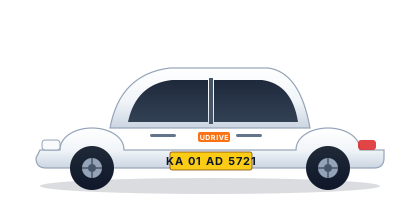
Below is a representative snapshot of a single taxi in the U Drive Fleet on GetAFix — the same view the operations team opens when deciding whether to service it, swap a part or retire it.
- Model
- Maruti Suzuki Wagon R
- Variant
- LXi CNG
- Fuel
- Petrol + CNG
- Colour
- Arctic White
- Registered
- 14 Feb 2023
- Chassis
- MA3****1234567
Cost per km is ₹2.38 against a fleet average of ₹2.91. Estimated 18 months of useful life remaining. System recommends continued service — review again at 1.65 L km.
12-month expense ledger
Total: ₹3.52 L- Fuel (CNG)62%₹2,18,500
- Service & parts19%₹68,400
- Insurance8%₹28,500
- Tyres6%₹22,000
- Permits + FC4%₹14,200
Parts genealogy — every fit, refit and replacement
- Front brake pads3 events
- 2023-11· fitted
- 2024-08· refurbished
- 2025-02· replaced
- Air filter3 events
- 2024-02· fitted
- 2024-09· replaced
- 2025-04· replaced
- Battery (45Ah)2 events
- 2023-02· fitted
- 2025-07· replacedcovered under warranty
- Clutch plate1 event
- 2023-04· fittedcurrently on vehicle
- Engine oil filter3 events
- 2024-11· replaced
- 2025-09· replaced
- 2026-03· replacedlast 40-day service
Outcome
- Spare-parts spend across the 600-vehicle fleet fell ~18% in the first year, driven largely by used-part intelligence preventing duplicate purchases and surfacing serviceable stock the team had previously written off.
- Service reminders moved from reactive ("we noticed it was overdue") to a disciplined 40-day window — no taxi in the fleet now runs past its service date.
- Repair-vs-replace decisions that used to take days of back-and-forth with multiple estimates are now made in minutes against the vehicle's complete cost ledger and part genealogy.
- Every taxi now has a single, complete cost-of-ownership view — captive garage work, external invoices, fuel, permits and statutory fees all rolled up against one asset, so ageing vehicles are retired at the right time instead of quietly bleeding margin.
“Asset genealogy is the single biggest change for us. Across 600 taxis we finally see the full history of every vehicle, every part and every rupee spent on it — and when a taxi is no longer worth repairing, the system tells us.”